Blog 6 - Opening Research
- Tina L
- 2024年4月8日
- 讀畢需時 4 分鐘

已更新:2025年4月25日
Film openings, also known as opening sequences, are the first moments of a film that set up the tone, setting, characters, and sometimes the plot of the film. A well-crafted opening can be iconic and memorable, providing an immersive entry point into the narrative world of the film. It's an opportunity for filmmakers to grab the audience's attention and make a first impression that can have lasting effects on the viewer's experience.
Joker (2019)

Film Studio/Distributor: Warner Bros. Pictures
Year of Release: 2019
Director: Todd Phillips
Starring: Joaquin Phoenix (as Arthur Fleck/Joker), along with Robert De Niro, Zazie Beetz, Frances Conroy, and others.
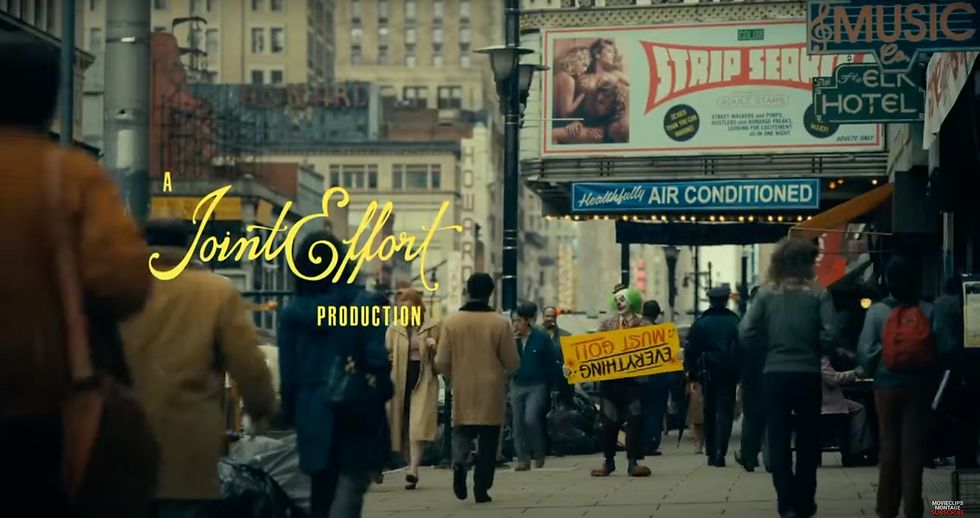
The opening sequence of "Joker" (2019) sets a gritty and somber tone as it introduces the protagonist, Arthur Fleck, in a state of emotional distress. He is seen preparing for his job as a street clown, painting his face and forcing a smile with his fingers—a symbolic gesture that reflects the film's exploration of the character's struggle with societal rejection and his own identity. The sequence is underscored by a melancholic score, emphasising the bleak atmosphere of Gotham City and Arthur's isolation within it.
Camera & Editing
The film opens with a slow zoom in to a close-up of Arthur Fleck applying his clown makeup. The editing is deliberate, moving slowly to create an intimate yet uncomfortable atmosphere and focuses on the protagonist, There's a rhythm to the sequence that syncs with the melancholic soundtrack, which is haunting and sorrowful and reinforces Arthur's desolation and the film's dark tone.

Towards the end of the opening, Arthur Fleck is attacked by a group of youths who steal his sign. Where handheld camera is used to create a sense of chaos and instability. The camera's point of view might shift, creating empathy with Arthur by allowing the audience to see through his eyes, only to be contrasted by wider shots that reinforce his isolation as he is surrounded and overpowered by the youths. Quick cuts between Arthur's attempts to flee and the youths' relentless pursuit can build a sense of urgency and panic.
The camera pulled out away from him when he was being hit to the ground emphasised his isolation and created empathy among audience.

Mise-en-scène
The drab colours of the surroundings, the decay of the city, and the downbeat appearance of the characters all serve to immerse the viewer in the film's setting—a Gotham City that feels real and lived-in. Arthur's costume is bright but worn, hinting at his attempt to bring joy in a joyless environment. However, his makeup and costume is standing out against the city’s drab palette, symbolising his discordant presence in a world that rejects him, also juxtaposed with the violence inflicted upon him.
Sound
There is no music played during the chase and the attack, replaced by the diegetic sounds of the city and the confrontation, making the scene starkly real. The sound of the sign hitting Arthur, his gasps and grunts, the taunting of his attackers which focuses the audience's attention on the violence.
Get Out (2017)

Film Studio/Distributor: Universal Pictures, Blumhouse productions
Date of Release: February 24, 2017
Director: Jordan Peele
Starring: Daniel Kaluuya, Allison Williams, Lil Rel Howery, LaKeith Stanfield, Bradley Whitford, Caleb Landry Jones, Stephen Root, and Catherine Keener.
In the opening scene of "Get Out," we are introduced to a Black man named Andre, who is walking alone at night through a suburban neighbourhood. He is talking on the phone, expressing his unease about being in an unfamiliar, and the feeling that he stands out because it is a white neighbourhood. As he ends the call and continues to walk, a white car slowly pulls up alongside him. The scene is expertly crafted to evoke a sense of dread and suspense, setting the tone for a film that explores racial tensions and plays upon the fear of being watched, targeted, and ultimately hunted, due to one's race. The opening sequence ends with the car driving away with Andre, leaving viewers with a chilling understanding that this peaceful neighbourhood may not be as safe as it appears, especially for a Black man. This opening lays the foundation for the film's broader commentary on race, belonging, and the black experience in America.
Camera & Editing
The film opening is a long tracking shot with no cuts. This technique builds tension by allowing the audience to experience the scene in real-time, without the relief that cuts might provide. The director also uses sudden reverse shot. When the camera switches from Andre's point of view to show the car, the audience is given crucial information about the emerging danger. The sudden reverse shot not only reveals the immediate threat but also sets up the audience for the action that will follow. Initially, the editing pace is slow, reflecting the character's casual stroll. However, as the threat becomes apparent, the cuts become faster, heightening the suspense. (1:31 to 1:39)

Mise-en-scène
The scene is set at night, which inherently adds a layer of mystery and danger. The dim street lights cast shadows, contributing to the ominous feeling and suggesting the character's vulnerability. The choice of a quiet, seemingly safe suburban street as the setting plays on social and cultural expectations, which creates contrast with the abnormal events using these as a tool to subvert the audience’s assumptions and hint at the film's broader themes of hidden threats within American society. Moreover, the car that appears is nondescript, adding to the mystery. It becomes a symbol of threat when the music starts


Sound
The music incorporates elements of horror and suspense soundtracks, characterised by dissonant tones and eerie motifs. This helps establish a feeling of unease right from the beginning and reinforce the genre, thriller. The melody might start subtly but grows in intensity, mirroring the escalating tension in the scene. The use of staccato notes, high-pitched strings, or abrupt changes in musical phrases can jolt the audience, enhancing the sense of impending danger.
The use of diegetic sound - the character's footsteps and his conversation on the phone are diegetic and ground the scene in reality. The quiet suburban setting amplifies these sounds, making the scene feel more isolated and tense.
Silence is used effectively before the abduction, creating a vacuum that makes the sudden violent actions more shocking.


留言